
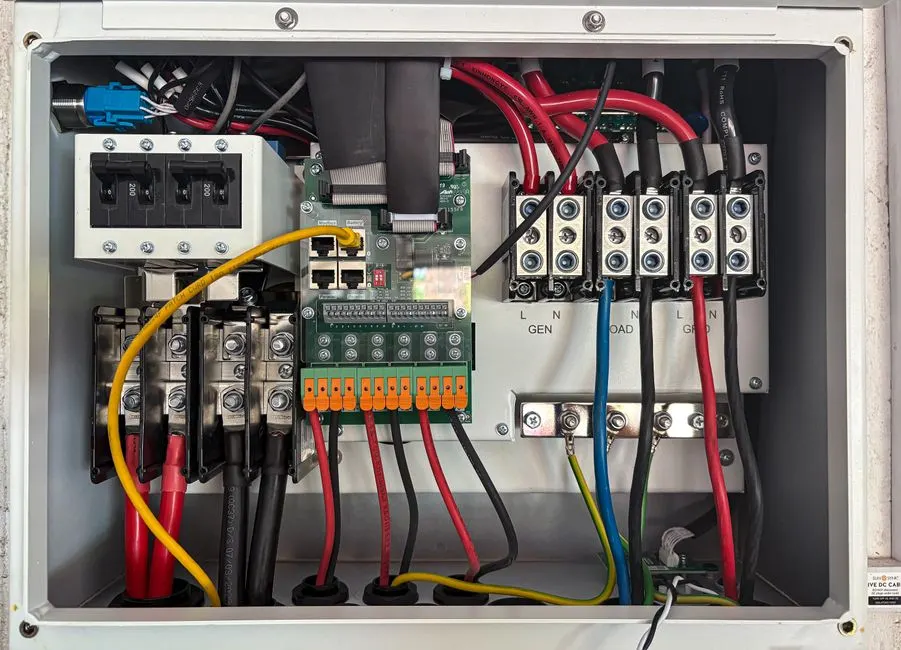
San Mateo weather affects your electrical panel mainly through salt-laden fog, winter rain intrusion, and repeated heat-and-cool cycles that corrode terminals and trip breakers. If your panel sits on an exterior wall or in a garage near the coast, those three forces are working on it every month of the year. Below we cover what each one does, the warning signs to watch for, and how to stop weather damage before it turns into a full replacement.
How San Mateo weather affects electrical panel CA performance is a real question, not a marketing angle. We are 15 miles from the Pacific, we get 20 to 30 inches of rain in a normal winter, and our marine layer keeps outdoor metal damp for hours after sunrise. Panels that would last 40 years in Sacramento often show rust and pitting here in 15 to 20.
How San Mateo weather affects your electrical panel in CA
How San Mateo weather affects your electrical panel in CA comes down to one category: moisture-driven corrosion that attacks the metal parts carrying current. A residential electrical panel is the metal enclosure and breaker assembly that distributes power from the utility line to every circuit in your home - and it is only as reliable as the tightness of the connections inside it.
Three weather patterns do most of the damage here:
- Salt fog. The marine layer carries chloride particles inland from the coast. Those particles settle on exposed metal, hold moisture against the surface, and accelerate rust on panel enclosures, breaker clips, and bus bars.
- Winter rain and wind-driven moisture. Water finds gaps around conduit entries, meter sockets, and older panel covers. Once inside, it pools at the bottom of the enclosure and wicks up into the breaker terminals.
- Thermal cycling. Summer afternoons push garage temperatures past 100°F, and coastal nights drop into the 50s. Metal expands and contracts, loosening lugs and stressing solder joints on the bus.
None of these destroy a panel in one season. They stack up. A panel that has been slowly corroding for a decade is the one that fails during the first big storm of the year, usually at 9 p.m. on a Sunday.
If your panel is already showing rust or scorch marks, our team handles electrical panel repair San Mateo CA and can tell you in one visit whether it is repairable or needs replacement.
Why coastal fog and salt air are the biggest threat
Coastal fog and salt air are the biggest threat to San Mateo electrical panels because chloride deposits keep metal surfaces wet and chemically active far longer than plain rain does. A panel in Hayward may dry out by 10 a.m. after a foggy night. A panel in San Mateo can stay damp until noon.
That extended wet time matters. Corrosion on a copper lug or aluminum bus bar is a chemical reaction, and reaction speed depends on how long the surface stays wet. Doubling the wet hours roughly doubles the corrosion rate.
Where you live in the city changes the exposure:
- West of El Camino Real - closest to the fog belt. Panels in garages and on exterior walls here show the fastest corrosion.
- Downtown and Hayward Park - older housing stock, many panels from the 1950s through 1970s, and plenty of exterior-mounted meter mains.
- Hillsborough and the hills above Crystal Springs - more wind exposure and more rain, but less salt.
- Foster City and the bayfront - bay moisture plus salt, similar to the coast but with more wind-driven rain.
We see the same pattern in neighboring towns. Homeowners we work with on Electrical Panel Upgrade in Burlingame deal with identical fog exposure, and the panels we replace there fail for the same reasons.
Winter rain, wind, and storm-driven panel damage
Winter rain in San Mateo causes most of the sudden panel failures we get called for, because water that gets inside an enclosure shorts out breakers and trips the main. A normal season here delivers 20 to 30 inches of rain, most of it between November and March.
The entry points are predictable:
- Conduit hubs on the top of the panel. If the hub is not sealed, water runs straight down the conduit into the enclosure.
- Meter socket gaskets. Rubber gaskets dry out and crack after 10 to 15 years. Once cracked, they let water in behind the meter.
- Panel cover screws and knockouts. Missing screws and open knockouts are open doors for wind-driven rain.
- Cracked or brittle enclosure paint. Once the factory finish fails, bare steel starts rusting through.
After a big storm, the calls we get are almost always the same: main breaker tripped, half the house dead, or a burning smell near the panel. If that happens to you, shut off the main if it is safe to reach, and call for emergency electrical panel repair San Mateo rather than resetting the breaker repeatedly.
If your panel is a fuse box, storm damage is worse. Old fuse blocks have no modern sealing, and the fuse clips corrode quickly. That is one reason we recommend fuse box replacement San Mateo CA for any home still running Edison-base or cartridge fuses.
Summer heat, thermal cycling, and nuisance breaker trips
Summer heat in San Mateo does not usually hit 100°F on the coast, but garages and attached utility closets regularly reach 95°F to 110°F in July and August. That heat does two things to a panel.
First, it raises the resistance of every connection. A lug that was torqued correctly at installation can loosen after years of expansion and contraction. Loose lugs run hotter, and hot lugs are the number-one cause of nuisance breaker trips we find on service calls.
Second, heat reduces the current a breaker can carry before it trips. A 20-amp breaker in a 100°F garage may trip at 16 or 17 amps of real load. That is why your kitchen circuit pops on a hot afternoon but runs fine in January.
Typical 2026 pricing in this area for a diagnostic visit runs $150 to $250, and a breaker replacement is usually $200 to $450 depending on the panel brand. If we find heat damage on the bus bar itself, replacement is the safer path, and we quote electrical panel replacement San Mateo CA with a fixed price before we start.
Warning signs your panel is already weather-damaged
Weather damage on a San Mateo panel usually shows up as physical symptoms long before it causes a failure. Walk out to your panel once a season and look for these:
- White or green powder on terminals or bus bars. That is aluminum or copper corrosion, and it means moisture has been inside.
- Rust streaks on the inside of the door or the bottom of the enclosure. Water is pooling somewhere it should not be.
- Breakers that feel warm to the touch when the circuit is not heavily loaded.
- A burning or fishy smell near the panel, even faint.
- Breakers that trip repeatedly on the same circuit within a week.
- Flickering lights when the refrigerator, HVAC, or dryer kicks on.
- Buzzing or crackling from inside the enclosure.
Any one of those is worth a professional look. Two or more together usually means the panel has been compromised for a while.
Common mistakes that make weather damage worse
The biggest mistake we see is homeowners sealing a panel themselves with silicone or spray foam. That traps moisture inside the enclosure and speeds up corrosion instead of stopping it. Panels need to breathe; the goal is to keep liquid water out, not to make the box airtight.
Other mistakes that shorten panel life in San Mateo:
- Power-washing the exterior wall near the panel. A direct spray into a meter socket or conduit hub can put water inside in seconds.
- Landscaping irrigation aimed at the panel wall. Sprinkler overspray keeps the enclosure wet all summer.
- Storing paint, pool chemicals, or fertilizer under the panel. Fumes from these accelerate corrosion on copper and aluminum.
- Ignoring a tripped main. Resetting a main breaker three or four times without finding the cause is how small problems turn into fires.
- Adding a hot tub, EV charger, or ADU circuit to a 100-amp panel. The added load plus summer heat is a recipe for a mid-August failure.
If you are adding a major load, we usually recommend a 200 amp panel upgrade San Mateo CA rather than trying to squeeze more circuits into an old 100-amp box. The newer panels also have better gasketing and powder coating, which matters in this climate.
When to call a professional
Call a licensed electrician any time you see corrosion, smell burning, or have a breaker that trips more than twice in a month. Those are not DIY problems. A panel carries 240 volts and 100 to 200 amps at the main lugs, and the utility feed stays live even when you shut off the main breaker.
Our team at San Mateo Panel Pros handles weather-related panel work every week - corrosion cleanup, breaker replacement, meter socket resealing, and full panel upgrades. We test every connection with a torque wrench and a thermal camera before we close the cover, and we tell you upfront what the job will cost.
If you are in one of the older neighborhoods near Central Park or along the Alameda, we also serve nearby areas like Electrical Panel Upgrade in San Carlos and the rest of the Peninsula. Same crews, same standards.
Frequently Asked Questions
How does San Mateo weather affect my electrical panel in CA?
Salt fog, winter rain, and heat cycles corrode terminals and loosen lugs over 10 to 20 years. The result is nuisance breaker trips, warm breakers, and eventually a main that will not reset. Panels within two miles of the bay or coast age fastest.
Can coastal fog damage my electrical panel in San Mateo California?
Yes. Chloride particles in fog hold moisture against metal for hours, which roughly doubles the corrosion rate compared to inland areas. Panels mounted on exterior walls or in open garages west of El Camino Real show visible rust in 10 to 15 years.
How do I protect my electrical panel from weather in San Mateo CA?
Keep irrigation and power washers away from the panel wall, replace missing cover screws, and have a licensed electrician reseal conduit hubs and meter gaskets every 5 to 7 years. Do not silicone the enclosure shut - that traps moisture inside.
Who repairs weather damaged electrical panels in San Mateo?
San Mateo Panel Pros repairs and replaces weather-damaged panels across San Mateo and the Peninsula. We handle corrosion cleanup, breaker replacement, meter socket resealing, and full upgrades, with fixed pricing quoted before work begins.
Does a panel upgrade actually help with weather resistance?
Yes. Modern panels have better powder coating, sealed hubs, and tighter gaskets than 1970s and 1980s equipment. A 200-amp upgrade typically adds 20 to 30 years of service life in this climate compared to repairing an old enclosure.
Get help with Electrical Panel Upgrade in San Mateo
If your panel is showing rust, tripping breakers, or has not been inspected since the last big storm season, we can take a look this week. Our team handles Electrical Panel Upgrade San Mateo CA work from single-breaker repairs to full 200-amp replacements.
Call San Mateo Panel Pros at +1 (650) 372-5030 and we will schedule a visit, test the panel, and give you a straight answer on repair versus replacement.